


Peace comes from having a plan! If you have been gathering extra food and stocking away other essential survival gear, then the answer is YES! Being prepared takes planning. Will there be some inconveniences – SURE – but that is life! It is important not to get caught up in doomsday headlines. Below are seven ways to prep for a wartime economy and feel some measure of control during uncertain times.
7 Ways to Prep a Wartime Economy
1. Consider Ways to Use Less Gas
With sanctions on Russia, it is widely believed that we will continue to see fuel prices race upwards. We use gas in our cars, trucks, RVs, generators, and lawnmowers. A hefty increase in prices can devastate a household’s budget. Make simple changes now before you feel the hurt in your pocketbook. Meal plan and try consolidating all of your errands to fewer trips to the supermarket per month. Teardrop Trailers are in high demand. Gas-guzzling RVs are being traded for smaller, gas-economic trailers. Electric bikes are another way you can minimize fuel costs.

2. Stock Up On Grains
Russia is the #1 international exporter of wheat. Common long-term food storage such as pasta, bread, and cereals are made of wheat. It was hard to find these food items during the start of the pandemic; most grocery stores couldn’t get these items on the shelves fast enough. The grains were sold out! Currently, most have restocked their inventory. So now is a good time to stock up on grains your family eats on a regular basis. Living off food storage is one way to cut costs when inflation takes a more significant chunk out of one’s paycheck.
Macaroni and Cheese was a common meal during WWII. When dairy was rationed, and in short supply during the war, a box of Mac & Cheese satisfied people’s cravings for the taste of cheese. Are you into sweet, spicy, crunchy, cheesy, chocolatey, or salty? Make sure you have some basic food staples stocked away, plus some foods that will curb a craving. I’ve been stashing a few boxes of brownies.

3. Grow What You Can
Russia is the largest exporter of fertilizer, they currently have a ban on exporting ammonium nitrate (fertilizer). This affects farmers worldwide, which drives the price of food up! It also increases the price of American fertilizer because of the international demand.
Food production costs have increased due to a shortage of farming parts, food packaging, and fertilizer. It has been cheaper to buy produce at the store rather than starting a garden from scratch – after paying for the seeds, fertilizer, garden box, pesticides, tools, etc. However, inflated food prices may soon change this reality.
In World War I and II, governments encouraged people to plant Victory Gardens. It was common practice to get produce from your backyard, neighborhood park, or church garden. As people worked together, many gardens populated communities.
Consider planting a fruit tree, start collecting gardening seeds, get serious about a vegetable garden, add an indoor herb garden, sprout seeds in a jar, start a mini mushroom farm, and learn more about hydroponic growing systems.

4. Look into Preserving Food
Have you tried to make jam, juice, or dehydrated snacks? It is a great hobby to start and may pay dividends in the future. There are various ways to preserve food, such as freeze-drying, canning, freezing, and dehydrating. Some can cost little to no money, like learning to dehydrate produce using the sun. Other ways to preserve food take planning and saving for equipment. It is a great way to prep for a wartime economy!

5. Have an Alternative Heat Source for Your Home
Natural gas prices have been relatively low (below $6) over the years. The cost now is $4.31 as of Feb 15, 2022, up from $2.84 in February 2021. That is a 50% increase before the war in Ukraine was announced, leaving natural gas uncertain. It’s never been more prudent to have a secondary plan for heating your home.

6. Improve Your Bug Out Bag
Whether in war or preparing for a natural disaster, have a bug-out bag for each family member, just in case. If everyone already has a bag, then update them. Rotate the food, batteries, pepper spray, and clothes (if you’ve changed sizes). Replace cheap survival gear with better equipment if you can. Decide where you would go if you needed to flee your home – Red Cross shelter, out-of-state family, or a favorite camping spot. Have a list of bug-out locations, out-of-state family and friend addresses, and phone numbers.

7. A List of Supplies
No one wants to be clamoring for the same scant supplies as their neighbors if World War III breaks out. What items would help you provide for your family if the worst happens? There is plenty of evidence depicting upcoming supply shortages and inflated costs of goods. Whenever a situation threatens vital everyday supplies, it impacts our freedom. When we move toward self-reliance, we limit the helplessness that comes with volatile markets. Self-reliance is a prerequisite for freedom! Now is a good time to prepare!! Get or make a list of emergency supplies that would come in handy in the event of a disruption in the supply chain.

Related Article:
10 Shortages that Lead to Famine
If you are enjoying this article, Prep for a Wartime Economy, please share it on your favorite social media.
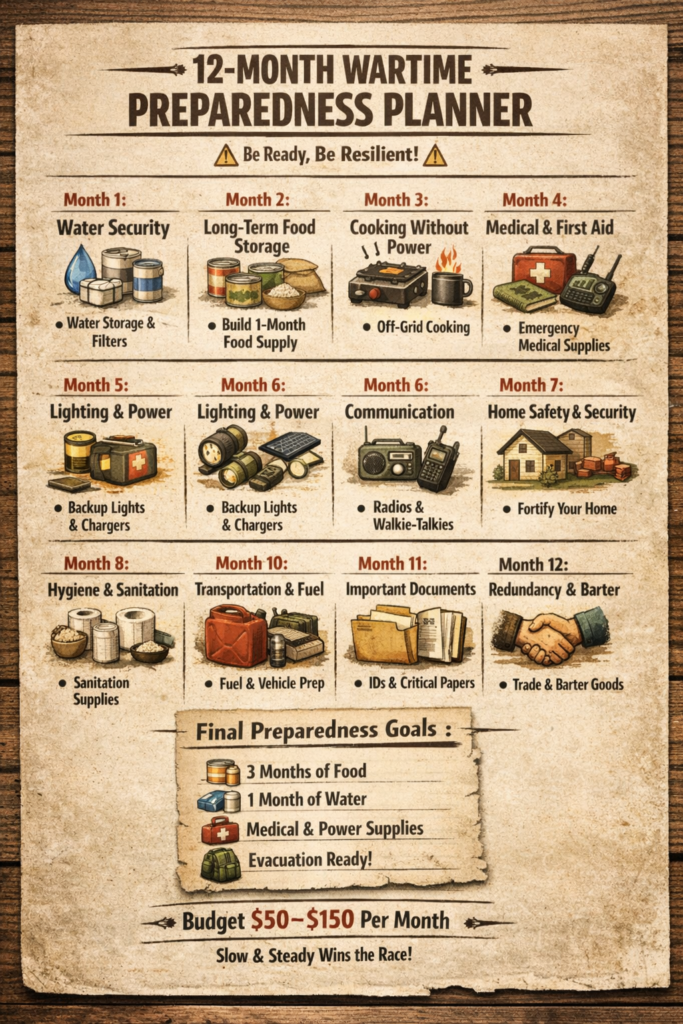
12-Month Wartime Preparedness Planner
Month 1 – Water Security 💧
Water becomes the most immediate problem during infrastructure disruptions.
Supplies
-
2 weeks of bottled water per person (minimum)
-
Water storage containers (5–55 gallon)
-
Water purification tablets
-
Water filter (gravity filter or backpacking filter)
Skills
-
Learn water purification methods
-
Identify local water sources
Month 2 – Long-Term Food Storage 🥫
Supplies
-
Rice (20–25 lbs)
-
Dry beans (20 lbs)
-
Pasta
-
Oats
-
Salt, sugar, honey
-
Cooking oil
Goal
Build a 6-month food supply.
Month 3 – Cooking Without Power 🔥
Supplies
- Off-grid cooking method
-
Manual can opener
-
Fire starters and lighters
Skills
-
Cook complete meals without electricity.
Month 4 – Medical & First Aid 🩺
Supplies
-
Comprehensive first aid kit
-
Gauze and compression bandages
-
Pain relievers
-
Anti-diarrheal medicine
-
Thermometer
-
Electrolyte packets
Skills
-
Basic first aid
-
Stop bleeding
Month 5 – Lighting & Power 🔦
Supplies
-
LED lanterns
-
Headlamps
-
Rechargeable batteries
-
Solar charger
-
Power bank
Goal
Have at least 2 lighting sources per person.
Month 6 – Communication 📻
Supplies
-
Emergency radio (hand crank or solar)
-
Walkie-talkies
-
Phone power banks
-
Printed emergency contact list
Skills
-
Establish family communication plans.
Month 7 – Home Safety & Security 🏠
Supplies
-
Motion lights
-
Door reinforcement
-
Window locks
-
Fire extinguishers
-
Smoke & carbon monoxide detectors
Skills
-
Home emergency plan
-
Fire evacuation drills
Month 8 – Hygiene & Sanitation 🧼
Supplies
-
Toilet paper
-
Trash bags
-
Hand sanitizer
-
Bleach
-
Portable toilet or bucket system
-
Soap and toothpaste
-
Feminine hygiene products
Goal
3 months of hygiene supplies.
Month 9 – Clothing & Warmth 🧥
Supplies
-
Wool blankets
-
Sleeping bags
-
Thermal clothing
-
Extra socks
-
Gloves and hats
-
Emergency bivy bags
Skills
-
Layering for cold weather.
Month 10 – Transportation & Fuel ⛽
Supplies
-
Fuel storage cans
-
Vehicle emergency kit
-
Maps of your area
-
Tire repair kit
-
Extra motor oil
Goal
Be ready to evacuate if necessary.
Month 11 – Important Documents 📂
Supplies
-
Waterproof document bag
-
Copies of:
-
IDs
-
Insurance
-
Birth certificates
-
Property records
-
Month 12 – Redundancy & Barter Items 🤝
Supplies
-
Extra food staples
-
Batteries
-
Lighters
-
hydration powder pouches
-
Over-the-counter medicines
-
Multivitamins
These items become valuable trade goods if supply chains fail.
Final Preparedness Goals
By the end of the year aim for:
-
6 months food supply
-
1 month water supply
-
Medical kit
-
Alternative cooking method
-
Backup power and lighting
-
Communication plan
-
Evacuation readiness

FYI- Your canned goods picture scares me a bit! Newer guidelines for safe canning will not involve turning the jars upside down. Poor canning practices can result in spoilage and families eating dangerous food that can cause sickness and maybe even death. Get a copy of the USDA Complete Guide to Home Canning to learn the best canning methods.